Getting a Cavity Filled in Japan: Process, Cost & Insurance
A cavity (虫歯, mushiba) is the most common reason foreigners visit a Japanese dentist — and with insurance, treating one is fast and cheap. Here's how the process works and what you'll pay.
Cavities are decay that has eaten into the tooth. Caught early, a filling is a quick, low-cost fix; left alone, the same tooth can need a root canal and crown. In Japan, basic fillings are covered by health insurance, so there's every reason to treat them promptly.
How you'll know you have one
Early cavities often have no symptoms — which is why checkups matter. As decay grows you might notice sensitivity to cold, sweet or hot foods, a twinge when biting, a visible dark spot or hole, or food catching in one spot. Any of these is worth a visit.
The treatment process
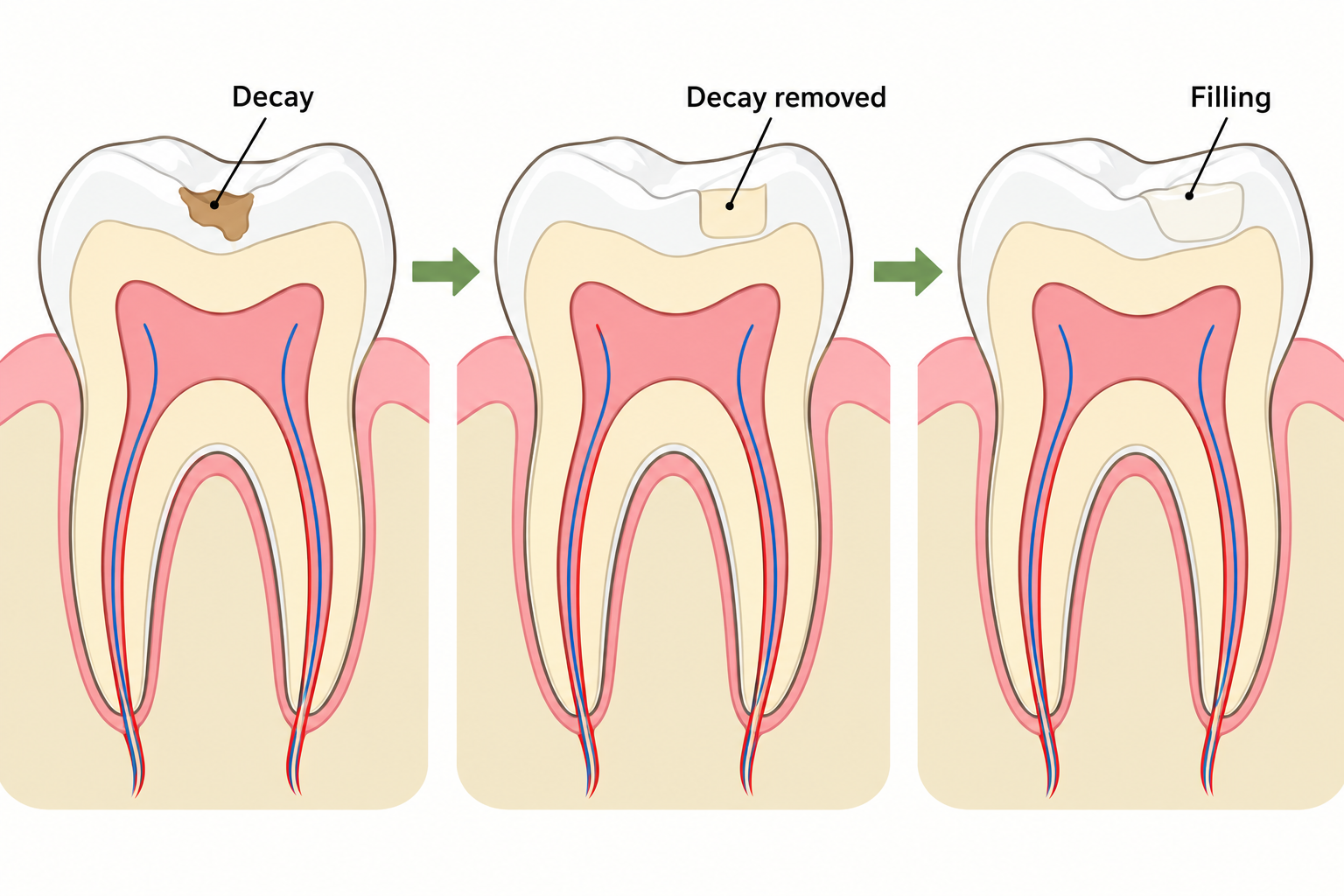
- Exam and X-ray. The dentist confirms the cavity's size and depth.
- Anesthesia (if needed). For deeper cavities you'll get a local anesthetic injection (麻酔, masui). Shallow ones may not need it.
- Removing decay. The dentist drills out the decayed part of the tooth.
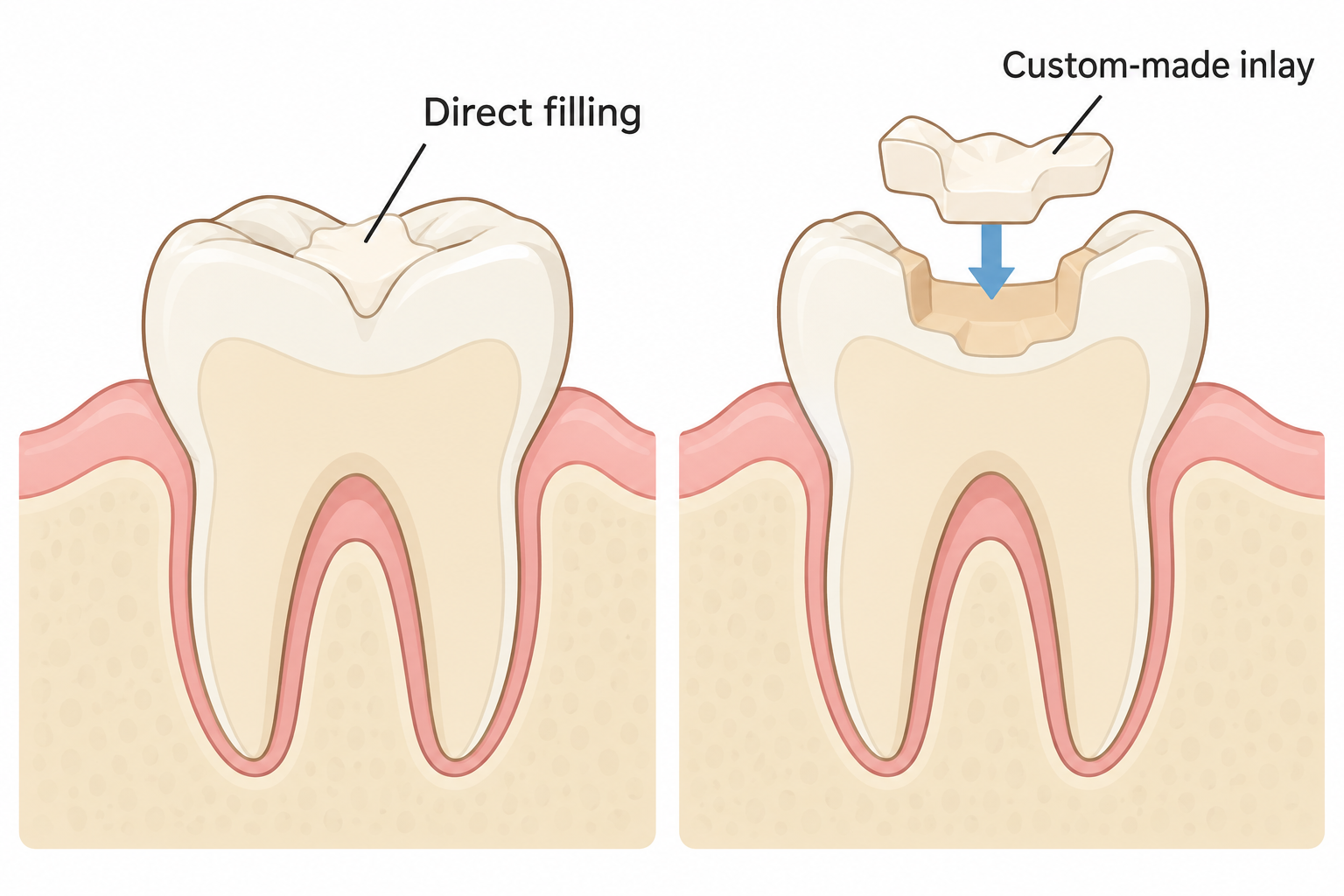
- Filling. The cavity is filled — usually with tooth-colored composite resin in one visit. Larger cavities may need an inlay made in a lab, requiring a second visit and a temporary filling in between.
- Bite check. The dentist adjusts the filling so your bite feels normal.
Insured vs. private fillings
| Insured (covered) | Private (100%) | |
|---|---|---|
| Materials | Composite resin, metal (silver) inlay, CAD-CAM | Ceramic / porcelain inlay, gold |
| Look | Composite is tooth-colored; metal is visible | Most natural, very durable |
| Your cost | ~¥1,500–¥4,000 | ~¥30,000–¥70,000 per tooth |
For most small to medium cavities, the insured composite filling looks good and works well. Ceramic inlays are an aesthetic upgrade for visible or larger restorations — worth discussing if appearance matters to you.
How many visits?
A simple filling is often done in one visit. A larger cavity needing a lab-made inlay typically takes two: prep and impression first, then fitting. Deep decay reaching the nerve may turn into root canal treatment, which takes several visits.
Does it hurt?
With local anesthesia, you'll feel pressure and vibration but not pain. The injection itself is a brief pinch. Afterward the tooth may be sensitive for a day or two, and the numbness wears off in a couple of hours — avoid chewing on that side until it does so you don't bite your cheek.
What it costs
With insurance, expect roughly ¥1,500–¥4,000 out of pocket for a standard filling, plus the first-visit exam/X-ray fee (~¥3,000–¥5,000) if it's a new clinic. Private ceramic inlays run ¥30,000–¥70,000 per tooth. Confirm which option you're getting before treatment.
After your filling
- Wait for numbness to fully wear off before eating.
- Mild sensitivity to temperature for a few days is normal; persistent or worsening pain warrants a callback.
- If your bite feels "high" or uneven after the anesthesia wears off, return for a quick adjustment — don't tolerate it.
- Keep up brushing and flossing; a filled tooth can still decay around the edges.
What happens if you ignore a cavity?
Cavities don't heal on their own — they only grow. A small spot of decay in enamel is painless and quick to fill. Left alone, it spreads into the softer dentin beneath, then toward the nerve, and the costs and discomfort escalate at each stage: from a simple filling, to a larger inlay, to root canal treatment plus a crown, and ultimately to extraction and tooth replacement if the tooth can't be saved. What would have been one short, affordable visit becomes several appointments and a much bigger bill. Pain is a late warning sign; by the time a tooth aches badly, the decay is usually well advanced. That's why catching cavities early — at a checkup, before symptoms — is the cheapest dentistry there is.
Preventing the next cavity
Once a cavity is fixed, the goal is avoiding the next one. Brush twice a day with fluoride toothpaste (especially important in Japan, where tap water isn't fluoridated), clean between teeth daily with floss or interdental brushes, and cut down on frequent sugary snacks and sipping sweet drinks — it's the frequency of sugar exposure, more than the amount, that feeds decay. Professional fluoride application at the dentist adds extra protection, and sealants can shield the grooves of molars. Above all, keep regular checkups every 3–6 months so any new decay is caught while it's still a tiny, cheap fix. A filled tooth can still decay around the edges, so good habits protect your existing work too.
Don't wait it out
A filling is one of the cheapest, quickest treatments in Japanese dentistry. Delaying turns a ¥2,000 filling into a ¥20,000-plus root canal and crown — and a lot more chair time. If you suspect a cavity, book an exam; if language is the barrier, a matching service can find an English-friendly clinic and book it for you.
Frequently Asked Questions
How much does a filling cost in Japan?
With health insurance, a standard composite filling is roughly ¥1,500–¥4,000 out of pocket, plus the first-visit exam and X-ray fee at a new clinic. A private ceramic inlay is not covered and costs around ¥30,000–¥70,000 per tooth.
Is a cavity filling covered by Japanese insurance?
Yes. Standard fillings using composite resin, metal or CAD-CAM materials are covered, and you pay about 30%. Only premium cosmetic materials like ceramic or gold inlays are private-pay.
How many visits does a filling take in Japan?
A simple filling is usually done in one visit. A larger cavity that needs a lab-made inlay typically takes two visits, and deep decay that reaches the nerve may become root canal treatment over several visits.
Need an English-speaking dentist? We'll find one — free.
Tell us your area, language, and the treatment you need. We match you with the right clinic and make the booking call for you, in your language.
This article is general information for foreigners living in or visiting Japan, not medical or financial advice. Prices are typical 2025–2026 ranges and vary by clinic, region, and your specific case; insurance coverage depends on your enrollment and the treatment. Always confirm details directly with the clinic.