Dental Crowns in Japan: Insured vs. Private Ceramic Options
Need a crown in Japan? You'll likely face a choice between a cheap insured crown and a pricier natural-looking ceramic one. Here's how to decide — and what each really costs.
A crown (被せ物, kabusemono) is a cap that covers a tooth too damaged for a simple filling — common after a root canal, a large cavity, or a cracked tooth. In Japan, the big decision is insured versus private, and it makes an enormous difference to both the price and the appearance.
When you need a crown
- After root canal treatment (the tooth becomes brittle and needs protection)
- A large cavity where too little healthy tooth remains for a filling
- A cracked or fractured tooth
- Replacing an old, failing crown
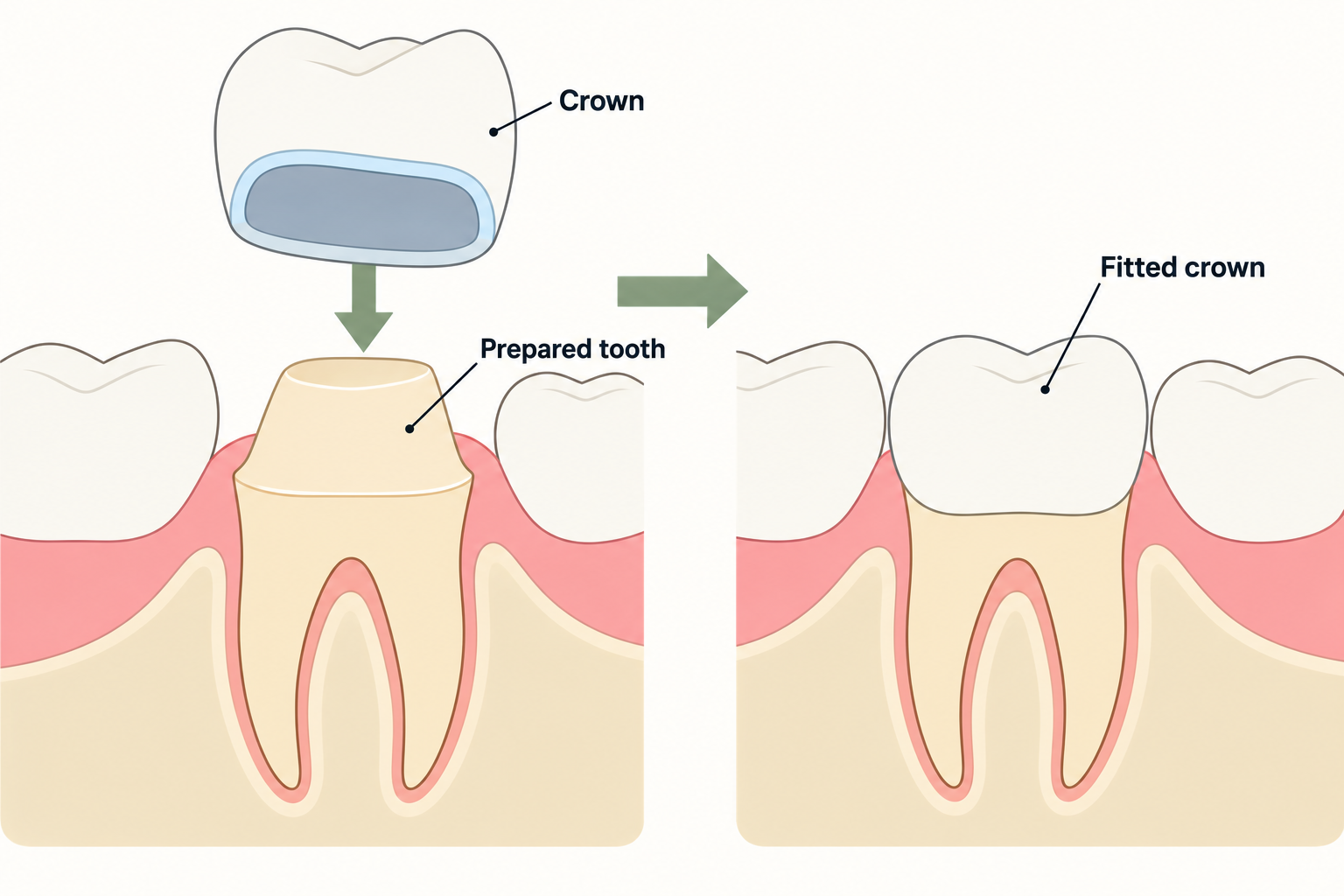
The process
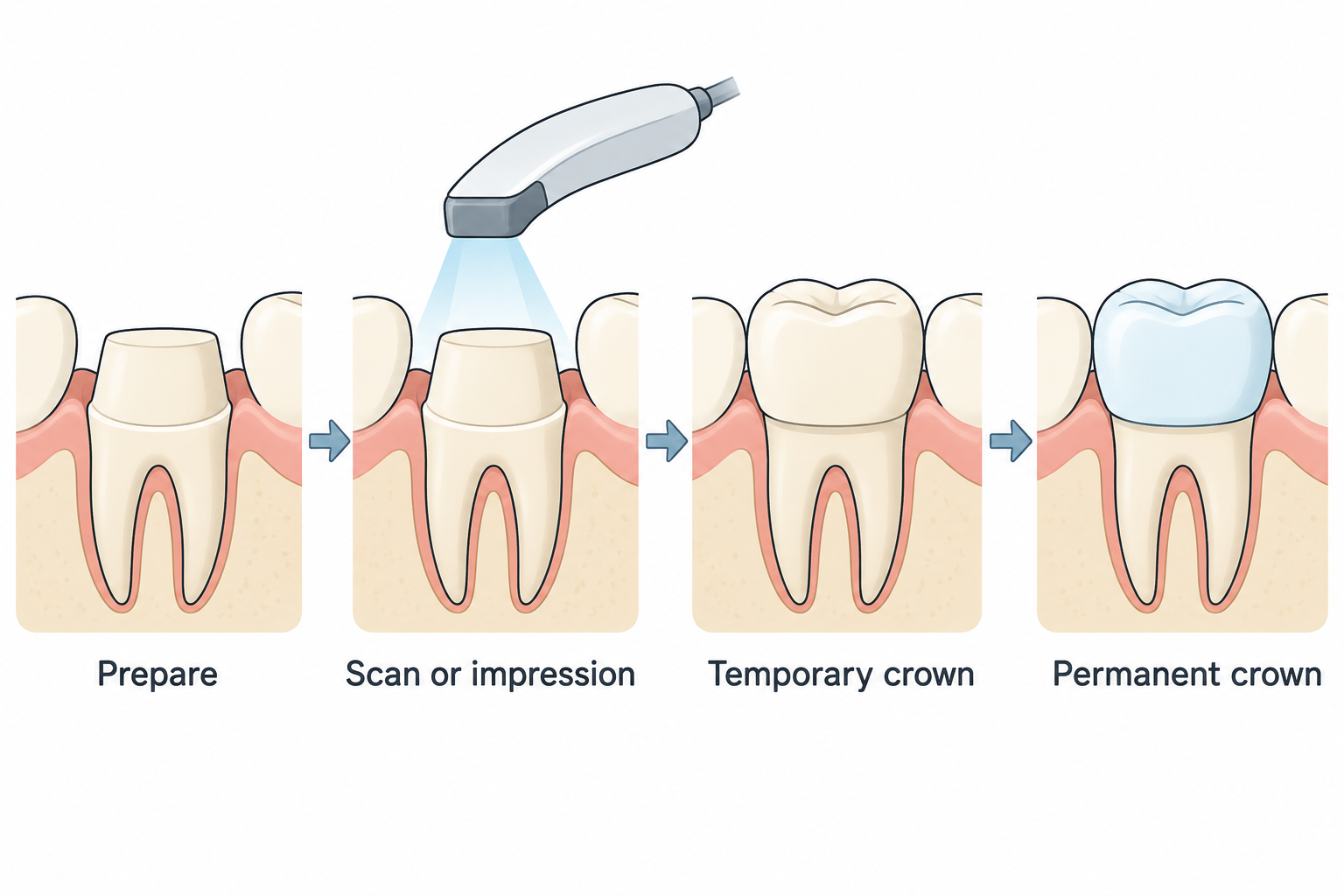
- Preparation. The dentist shapes the tooth and removes decay, under local anesthesia if needed.
- Impression / scan. A mold or digital scan captures the tooth shape.
- Temporary crown. You wear a temporary while the permanent one is made.
- Fitting. At a later visit (usually 1–2 weeks), the permanent crown is cemented and your bite adjusted.
Expect two or more visits. Some clinics with in-house CAD-CAM milling can make certain crowns same-day, but that's not universal.
Insured vs. private: the key choice
| Insured crowns | Private ceramic crowns | |
|---|---|---|
| Types | Silver-metal (back teeth), plastic-faced metal (front), CAD-CAM resin | All-ceramic, zirconia, ceramic-fused |
| Appearance | Metal is visible; plastic-faced can discolor over time | Natural, tooth-colored, stable color |
| Durability | Good; plastic facings wear faster | Excellent; zirconia very strong |
| Your cost | ~¥3,000–¥10,000 | ~¥80,000–¥180,000 per tooth |
Insured crowns
For back molars, a silver-metal crown is cheap, strong and invisible when you talk — many people happily choose it. For front teeth, an insured plastic-faced crown looks acceptable but can yellow or chip over years. CAD-CAM resin crowns (tooth-colored, covered for certain teeth) are a middle ground.
Private ceramic crowns
All-ceramic and zirconia crowns look like natural teeth, resist staining, and last well. They're the choice for visible teeth or if you want the best aesthetics — at several times the price, paid fully out of pocket.
What it costs
With insurance, a crown runs roughly ¥3,000–¥10,000 out of pocket (plus any root canal or prep fees). Private ceramic crowns are typically ¥80,000–¥180,000 per tooth depending on material (zirconia and high-end ceramics cost more) and the clinic. Always get a written estimate for private crowns.
Caring for your crown
- Brush and floss normally — decay can still form where the crown meets the gum.
- Avoid biting very hard objects (ice, pens) that could crack porcelain.
- Mild sensitivity for a few days after fitting is normal.
- If the crown feels high, loose, or your bite is off, return for an adjustment.
- A well-made crown can last 10–15 years or more with good care.
Crown materials explained
It helps to know what you're actually choosing between. Among insured options: silver-colored metal crowns (a gold-silver-palladium alloy, very strong, used on back teeth where they aren't visible); plastic-faced metal crowns for front teeth (a metal cap with a tooth-colored front that can discolor or chip over years); and CAD-CAM resin crowns (tooth-colored hybrid resin, milled by computer, covered for certain teeth — a good-value natural-looking option). Among private options: all-ceramic and e.max crowns (excellent aesthetics, ideal for front teeth) and zirconia (extremely strong and natural-looking, great for back teeth and grinders). Pricier doesn't always mean necessary — for an invisible back molar, an insured crown is often the sensible pick, while front teeth are where the cosmetic upgrade is most noticeable.
How long crowns last and when they fail
A well-made crown commonly lasts 10–15 years, and often longer with good care. The crown itself doesn't decay, but the natural tooth underneath and the gum margin still can — which is why brushing, flossing and regular checkups remain essential after you get one. Signs a crown may need attention include sensitivity or pain (possible decay or a loose crown), a crown that feels loose or has come off, a chip or crack in porcelain, or a dark line or recession at the gumline. If a crown comes off, keep it, avoid chewing on that side, and see your dentist — sometimes it can simply be re-cemented. Grinding your teeth at night (bruxism) shortens crown life, so mention it to your dentist, who may suggest a night guard.
Bottom line
Crowns in Japan come down to insured (cheap, functional, metal or resin) versus private ceramic (natural-looking, premium-priced). Match the choice to the tooth's visibility and your budget, get an estimate before private work, and confirm whether the clinic accepts insurance. Unsure where to go? A matching service can find an English-friendly clinic and explain your options.
Frequently Asked Questions
How much does a crown cost in Japan?
An insured crown (metal or CAD-CAM resin) costs roughly ¥3,000–¥10,000 out of pocket. A private all-ceramic or zirconia crown is not covered and typically costs ¥80,000–¥180,000 per tooth depending on material and clinic.
Are silver/metal crowns safe and normal in Japan?
Yes. Insured metal crowns are common, strong and well-established, especially for back molars where they aren't visible. They're a sensible, economical choice; ceramic is mainly chosen for appearance on visible teeth.
How many visits does a crown take?
Usually two or more: one to prepare the tooth and take an impression (you get a temporary crown), and another 1–2 weeks later to fit the permanent crown. Some clinics with in-house milling can do certain crowns same-day.
Need an English-speaking dentist? We'll find one — free.
Tell us your area, language, and the treatment you need. We match you with the right clinic and make the booking call for you, in your language.
This article is general information for foreigners living in or visiting Japan, not medical or financial advice. Prices are typical 2025–2026 ranges and vary by clinic, region, and your specific case; insurance coverage depends on your enrollment and the treatment. Always confirm details directly with the clinic.