Dental Implants in Japan: Cost, Procedure & Is It Worth It?
A dental implant is the closest thing to replacing a lost tooth with a natural one — and in Japan it's a high-quality but significant out-of-pocket investment. Here's the full picture before you commit.
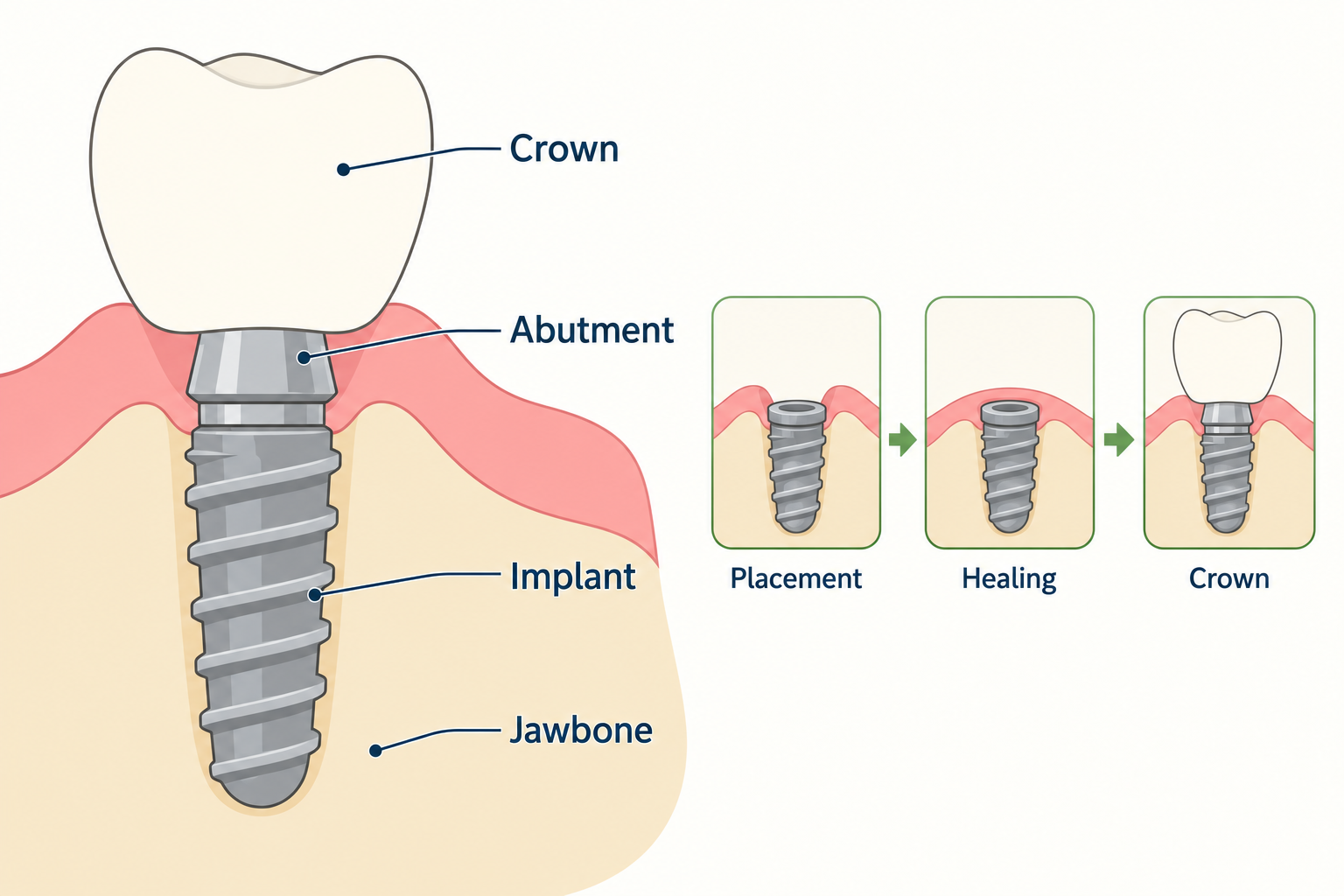
An implant replaces a missing tooth with a titanium post placed in the jawbone, topped by a crown. It's the most durable, natural-feeling tooth replacement, but it's surgery, it takes months, and it's not covered by Japanese health insurance. Understanding the process and cost helps you decide whether it's right for you.
When an implant makes sense
Implants are an option when you've lost one or more teeth to decay, injury or extraction and want a permanent replacement. They're often preferred over alternatives because they don't rely on grinding down neighboring teeth (as a bridge does) and feel like natural teeth. You generally need enough healthy jawbone and gums; if bone has shrunk, a bone graft may be needed first.
Implant vs. bridge vs. denture
| Implant | Bridge | Denture | |
|---|---|---|---|
| Feel | Most natural | Fixed, natural-ish | Removable |
| Affects other teeth? | No | Yes (grinds neighbors) | No |
| Insurance | Not covered | Often covered | Often covered |
| Cost (per tooth) | ¥300,000–¥600,000 | ¥3,000–¥10,000 insured (standard) | ¥5,000–¥15,000 insured (standard) |
| Longevity | 15+ years possible | ~7–15 years | Varies; needs adjustment |
If budget is the priority, insured bridges and dentures restore function affordably. If longevity and feel matter most and you can afford it, implants are the premium choice.
The implant procedure and timeline
- Consultation & imaging. A CT scan assesses bone and plans placement.
- Implant placement. The titanium post is surgically inserted into the jaw under local anesthesia.
- Healing (osseointegration). Over 3–6 months, bone fuses to the implant. A temporary tooth may be provided.
- Abutment & crown. Once healed, a connector and a custom crown are fitted.
Start to finish, expect several months. Bone grafting, if needed, adds time and cost.
What it costs in Japan
Implants are private-pay, typically ¥300,000–¥600,000 per tooth, all-in. Premium clinics in central Tokyo and complex cases (grafting, multiple implants) sit at the top of that range. The quote should include surgery, the abutment, the crown and follow-ups — confirm exactly what's included, and ask about the implant brand and warranty.
Choosing a clinic for implants
- Experience matters. Ask how many implants the dentist places and their success rate.
- Imaging. A clinic using CT planning is a good sign.
- Brand & warranty. Established implant systems have global support if you move countries.
- Written all-in estimate including grafting, crown and aftercare.
- Aftercare plan. Implants need maintenance cleanings to prevent peri-implantitis (gum infection around the implant).
- English support for the consent and multi-month relationship.
Risks and aftercare
Implant surgery is generally safe and predictable, but risks include infection, implant failure to integrate, and nerve issues if placed near nerves (why CT planning matters). Long term, implants can fail if gum disease sets in around them, so diligent home care and regular professional cleanings are essential. Smoking notably lowers success rates.
What's included in an implant quote — and what isn't
Because implants are private-pay and prices vary widely, the most important step is understanding exactly what a quote covers. A complete implant fee generally bundles the surgery to place the post, the abutment (the connector) and the final crown, plus follow-up visits. But several items are sometimes quoted separately and can add up: the CT scan and diagnostics, any bone graft or sinus lift needed to build up insufficient bone, a temporary tooth during healing, and future maintenance cleanings. Ask for an itemized, all-in written estimate, and clarify the implant brand (established global systems make future repairs easier, especially if you relocate) and any warranty. A cheaper headline price that excludes grafting or the crown isn't really cheaper — compare like for like.
Caring for an implant so it lasts
Implants can last 15 years or more, but they're not "fit and forget." The titanium post won't decay, yet the surrounding gum and bone can become infected — a condition called peri-implantitis that mirrors gum disease and is the main reason implants fail long-term. Protecting your investment means meticulous daily cleaning around the implant (your dentist will show you how, often with special brushes or floss), and regular professional maintenance cleanings, typically every few months. Smoking significantly raises the risk of both early failure and later infection, so quitting or cutting down genuinely improves your odds. Uncontrolled diabetes and teeth-grinding also affect success, so mention them. Treat the implant like a natural tooth that needs a little extra vigilance, and it should serve you for many years.
Bottom line
Implants in Japan are excellent quality but a major investment at¥300,000–¥600,000 per tooth, paid entirely out of pocket, over several months. They're the most natural, durable replacement; insured bridges and dentures are far cheaper alternatives. Choose an experienced clinic, get an all-in estimate, and ensure you understand the plan — ideally at an English-friendly clinic, which a matching service can help you find.
Frequently Asked Questions
How much does a dental implant cost in Japan?
Typically ¥300,000–¥600,000 per tooth, all-in, paid entirely out of pocket since implants aren't covered by insurance. Complex cases needing bone grafts and premium clinics in central Tokyo cost more. Always get a written estimate of exactly what's included.
Are dental implants covered by Japanese insurance?
No, in almost all cases. Insurance covers functional replacements like bridges and dentures but treats implants as an elective premium option. A narrow exception exists for certain reconstructive cases at designated hospitals.
How long does getting an implant take?
Usually several months. After the titanium post is placed, the bone needs 3–6 months to fuse to it before the final crown is fitted. Bone grafting, if required, adds more time.
Need an English-speaking dentist? We'll find one — free.
Tell us your area, language, and the treatment you need. We match you with the right clinic and make the booking call for you, in your language.
This article is general information for foreigners living in or visiting Japan, not medical or financial advice. Prices are typical 2025–2026 ranges and vary by clinic, region, and your specific case; insurance coverage depends on your enrollment and the treatment. Always confirm details directly with the clinic.