Dental Tourism in Japan: Is It Worth Getting Dental Work as a Visitor?
Japan is famous for precision, cleanliness and service — qualities that extend to its dentistry. But is it a smart place to plan dental work as a visitor? Here's an honest look at quality, cost, and what's realistic on a trip.
Dental tourism means traveling to another country for dental treatment, usually to save money or get faster/better care. Japan offers world-class quality and excellent hygiene, but its appeal as a dental tourism destination is nuanced — it's less about bargain prices and more about quality, especially for cosmetic work. Here's what to weigh.
The quality case for Japan
Japanese dentistry is meticulous, with high clinical standards, advanced technology, strict infection control, and famously courteous service. For cosmetic and precision work — ceramics, careful aesthetics, implants — many patients value that craftsmanship. If you're already visiting Japan and want top-tier work, the quality is there.
The cost reality
This is the crucial caveat: as a visitor you won't have Japanese health insurance, so you pay 100% of every treatment, and some clinics charge a higher self-pay rate to non-residents. That makes Japan less of a "cheap dentistry" destination than countries known for budget dental tourism. Where Japan competes is on quality-per-yen for cosmetic and complex work, not on rock-bottom prices for routine fillings.
| Treatment | Typical visitor price (no insurance) |
|---|---|
| Exam + X-ray | ¥5,000–¥15,000 |
| Simple filling | ¥10,000–¥30,000 |
| Teeth whitening | ¥30,000–¥80,000 |
| Ceramic crown | ¥80,000–¥180,000 |
| Dental implant (per tooth) | ¥300,000–¥600,000 |
What's realistic on a short trip?
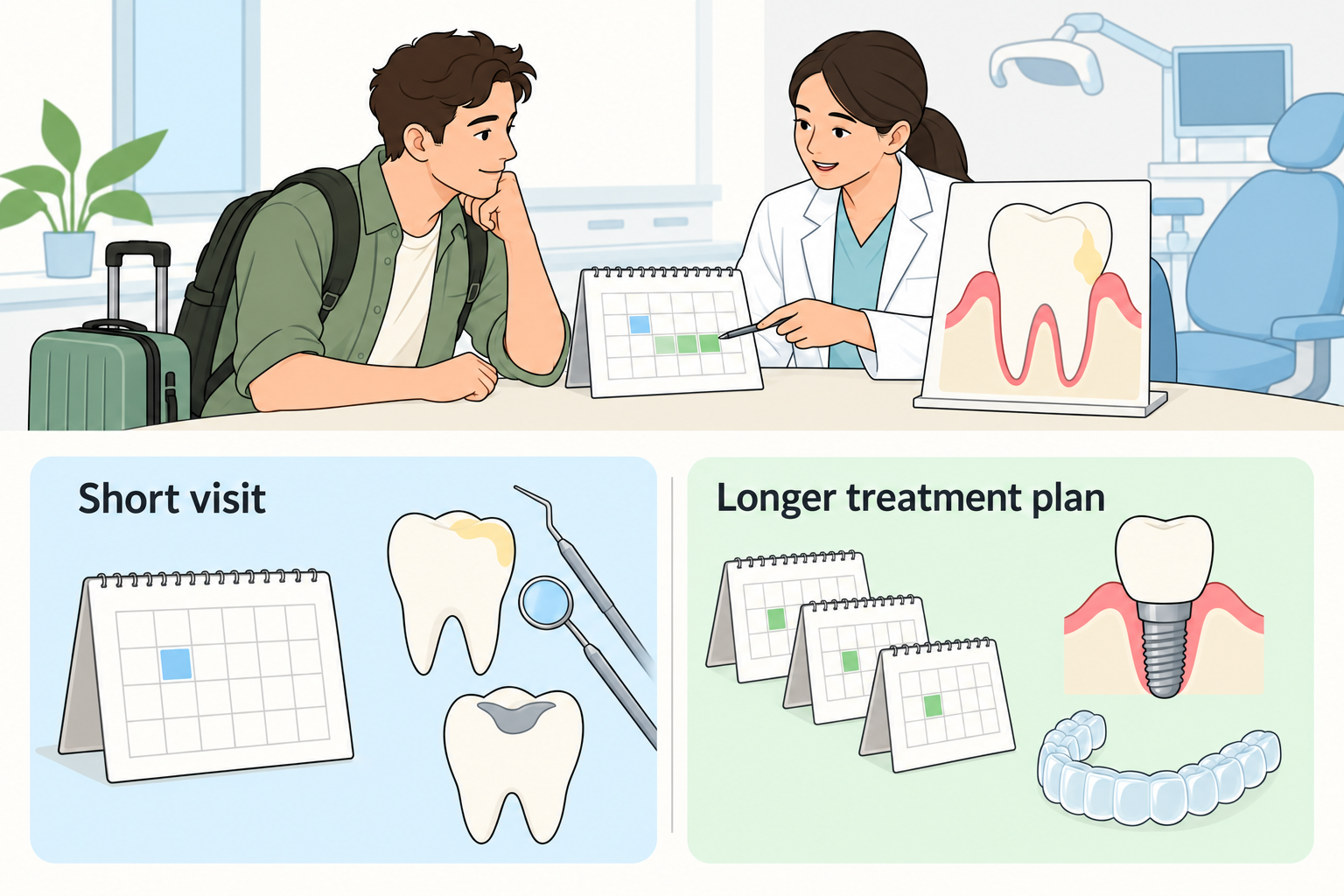
- Doable on a typical trip: cleaning, whitening, a simple filling, an emergency fix, a consultation.
- Needs a long or repeat stay: implants (months of healing), orthodontics (years), extensive crown/bridge work (multiple visits).
Because Japanese clinics often stage treatment across visits, plan complex work around your travel dates — or accept that you may need to return.
Dental emergencies for tourists
If you're visiting and hit a dental emergency — sudden severe pain, swelling, a broken tooth — Japan can help. Big cities have late-opening and English-friendly clinics, and prefectures run Sunday/holiday emergency dental services. You'll pay private rates, so keep receipts for any travel insurance claim. See our emergency dental guide for specifics, and dial #7119 in many regions for guidance.
Practical tips for treatment as a visitor
- Choose an English-friendly clinic. Consent and aftercare instructions matter even more when you're far from home.
- Get a written estimate and treatment record you can take to your home dentist for follow-up.
- Check travel insurance — some policies cover emergency dental treatment; cosmetic work won't be covered.
- Plan recovery time after extractions or surgery before flying; ask the clinic about flying post-treatment.
- Bring records of any existing dental work or issues.
- Carry cash or check card acceptance — not all clinics take cards.
Should you do it?
Japan is a strong choice if you prioritize quality and are already here, want cosmetic work done beautifully, or face an emergency mid-trip. It's a weaker choice if your only goal is saving money on routine treatment — without insurance, prices are full freight, and budget-focused dental tourism destinations are cheaper. For residents, the math flips entirely: with insurance, Japanese dental care is both excellent and affordable.
Flying after dental treatment
If you're getting work done mid-trip, factor in flying. Air travel itself doesn't usually cause problems, but the timing around certain procedures matters. After an extraction or oral surgery, dentists generally prefer you wait a short period before a long flight, since cabin pressure changes and the dehydration of flying can occasionally aggravate bleeding or discomfort — ask your dentist for a specific recommendation based on what you had done. A condition sometimes called "aerodontalgia" can cause tooth pain at altitude if there's an untreated cavity, a recent filling with trapped air, or active infection, so it's worth resolving acute problems before you fly rather than after. For routine work like a cleaning, a filling or whitening, flying the same day is normally fine. When in doubt, get the dentist's explicit clearance and carry any prescribed painkillers in your hand luggage.
Continuity of care across countries
One real downside of treatment abroad is follow-up: if something needs adjusting after you leave Japan, your home dentist has to take over cold. Reduce that risk by asking the Japanese clinic for a written treatment record and any X-rays or scans you can carry home — ideally with the materials and implant brand used, so a dentist elsewhere can match or service the work. Keep all receipts and estimates for insurance and for your records. For implants or crowns, confirm the warranty terms and whether the brand is supported in your country. And finish what can be finished before you fly: leaving a multi-stage treatment half-done in another country is the situation most likely to cause trouble. A little paperwork and planning makes treatment in Japan something your home dentist can build on rather than puzzle over.
Bottom line
As a visitor, Japan offers exceptional dental quality but no insurance discount, so it suits quality-seekers and emergencies more than bargain hunters. Plan complex work around your travel timeline, choose an English-friendly clinic, keep records and check travel insurance. Need help finding a clinic that treats visitors in your language? A matching service can arrange it quickly.
Frequently Asked Questions
Can tourists see a dentist in Japan?
Yes. Visitors can be treated at most clinics, but without Japanese health insurance you pay 100% of the cost, and some clinics charge a higher self-pay rate. Cleanings, whitening, simple fillings and emergency care are all available; complex multi-stage work may require returning.
Is Japan good for dental tourism?
Japan excels on quality, hygiene and service, making it attractive for cosmetic and precision work if you're already visiting. But it's not a budget destination — without insurance you pay full price, so it competes on quality rather than low cost compared with countries known for cheap dental tourism.
What should I do for a dental emergency as a tourist in Japan?
Big cities have late-opening and English-friendly clinics, and prefectures run Sunday and holiday emergency dental services; dial #7119 in many regions for guidance. You'll pay private rates, so keep receipts for any travel insurance claim, and seek care promptly for severe pain or swelling.
Need an English-speaking dentist? We'll find one — free.
Tell us your area, language, and the treatment you need. We match you with the right clinic and make the booking call for you, in your language.
This article is general information for foreigners living in or visiting Japan, not medical or financial advice. Prices are typical 2025–2026 ranges and vary by clinic, region, and your specific case; insurance coverage depends on your enrollment and the treatment. Always confirm details directly with the clinic.