Root Canal Treatment in Japan: What to Expect and Costs
Root canal treatment saves a tooth whose nerve is infected or dying — and in Japan it's covered by insurance, so the cost is modest. The main thing to know: it usually takes several visits.
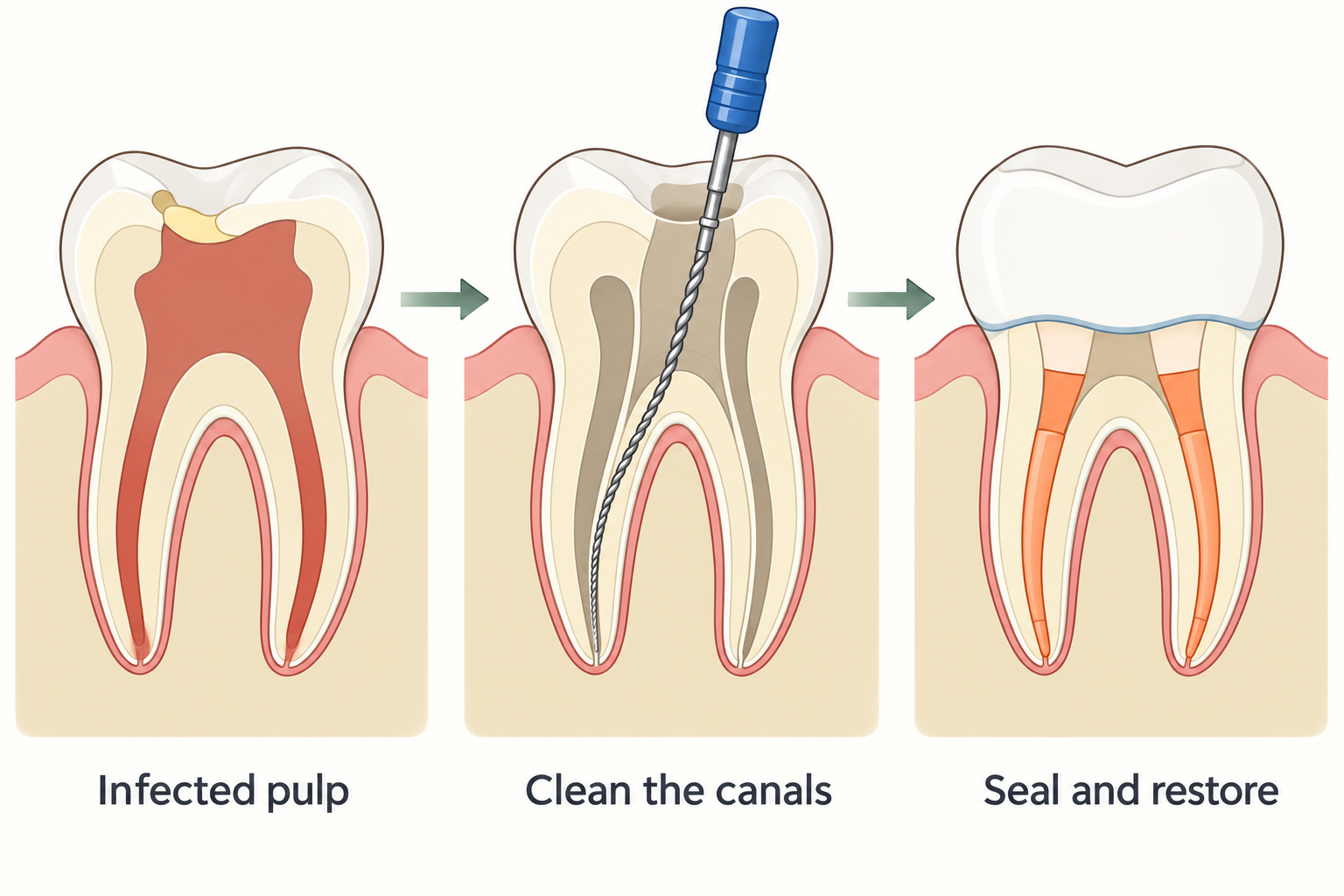
When decay or injury reaches the soft pulp inside a tooth, the nerve can become infected, causing serious pain. Root canal treatment (根管治療, konkan chiryō) removes the infected pulp, cleans and seals the canals, and saves the tooth from extraction. In Japan it's a standard, insurance-covered procedure.
Signs you may need a root canal
- Severe, lingering toothache, especially spontaneous or throbbing pain
- Prolonged sensitivity to hot or cold that lingers after the stimulus is gone
- Pain when biting or touching the tooth
- A pimple-like bump on the gum, swelling, or a bad taste (signs of infection)
- A darkening tooth
Sometimes there's little pain and the problem is found on an X-ray. Only a dentist can confirm whether you need root canal treatment.
The process, step by step
- Diagnosis. X-rays and tests confirm the pulp is infected or dead.
- Anesthesia. The tooth is numbed; the procedure shouldn't hurt.
- Cleaning the canals. The dentist removes infected pulp and cleans and shapes the inner canals. This may be done over several visits, with medication placed inside and a temporary filling between visits.
- Filling the canals. Once clean and symptom-free, the canals are sealed.
- Restoration. The tooth is rebuilt — usually with a crown, since a root-treated tooth becomes brittle. This is a separate step (see our crown guide).
Why so many visits?
This is the part that surprises foreigners most. In Japan, insured root canal treatment is commonly spread across 3–6 short visits. The dentist disinfects the canals gradually, checks that infection is resolving, and only seals the tooth once it's settled. It follows insurance treatment rules and is genuinely about doing it carefully — but it does mean several weekly appointments. Don't skip them; an unfinished root canal can re-infect.
Cost with insurance
| Item | Typical out-of-pocket (with insurance) |
|---|---|
| Root canal treatment (per tooth, total) | ¥6,000–¥15,000 over several visits |
| Crown afterward (insured) | ¥3,000–¥10,000 |
| Crown afterward (private ceramic) | ¥80,000–¥180,000 |
Front teeth (one canal) are cheaper and quicker than molars (multiple canals). Advanced private endodontics can run ¥50,000–¥150,000+ per tooth.
Does it hurt?
The procedure itself is done under local anesthesia, so it's usually no more uncomfortable than a filling — and it relieves the pain you came in with. Some tenderness for a few days afterward is normal; over-the-counter painkillers handle it. Severe or worsening pain, swelling or fever afterward warrants a call to the clinic.
Aftercare
- Don't chew hard on the tooth until it's permanently restored — the temporary filling is fragile and the tooth is weak.
- Keep all your follow-up appointments to finish the treatment.
- Get the recommended crown promptly; an unprotected root-treated tooth can crack and be lost.
- Maintain good brushing and flossing.
Root canal vs. extraction: which is better?
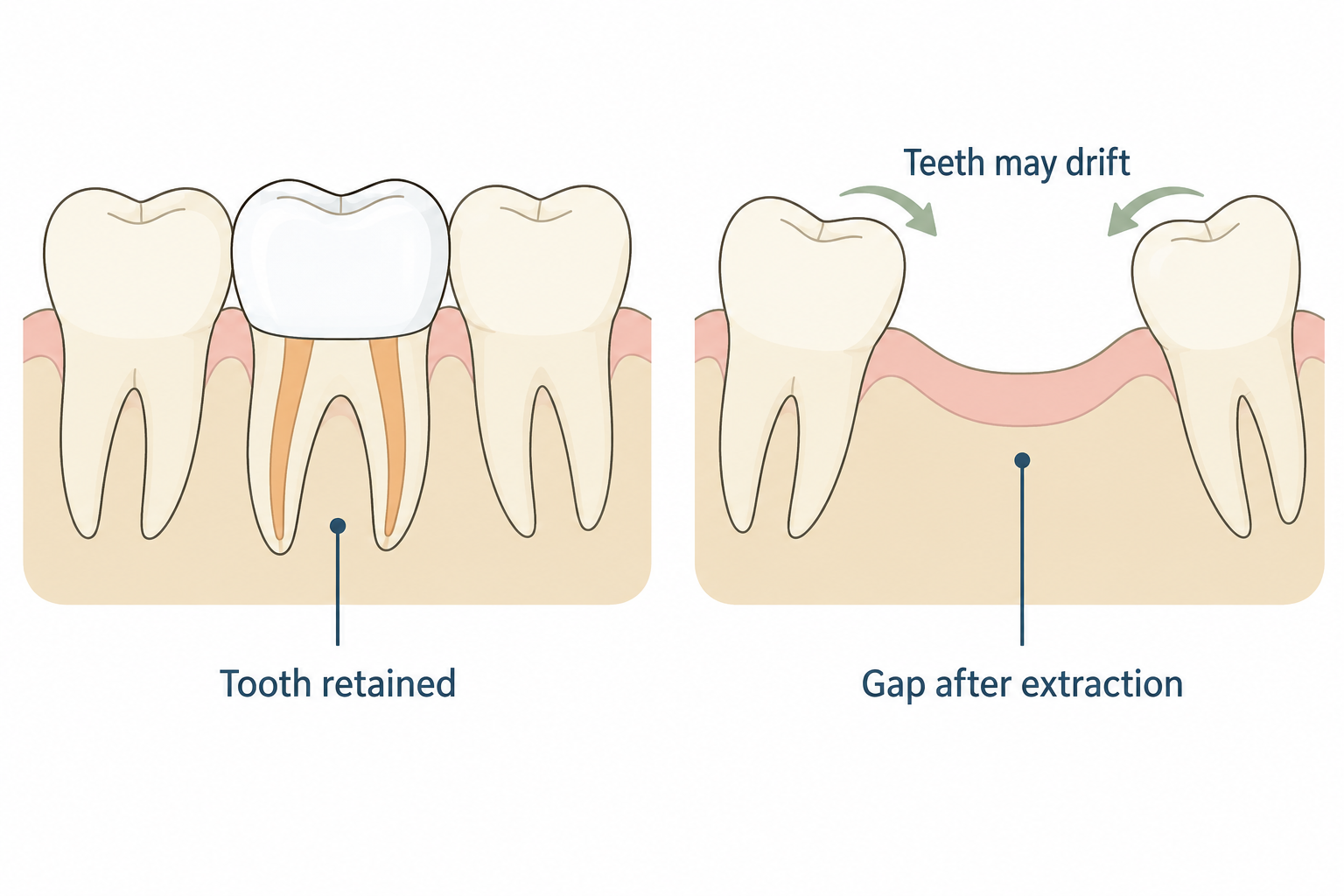
When a tooth's nerve is badly infected, you'll often face a choice: save it with root canal treatment, or remove it. Saving your natural tooth is usually preferable — nothing artificial functions quite as well, and keeping the tooth preserves the surrounding bone and your bite alignment. Root canal treatment, followed by a crown, lets a dead tooth keep doing its job for many years. Extraction is simpler and cheaper upfront, but a gap then needs filling — with a bridge, denture or implant — or the neighboring teeth can drift and the bite can change over time, so the "cheaper" option often costs more in the long run. Extraction makes sense when a tooth is too damaged or cracked to restore. Your dentist can advise based on the X-ray and how much healthy tooth remains; for a borderline case, a second opinion is reasonable.
Why finishing the full course matters
The most common mistake foreigners make with root canals in Japan is stopping once the pain goes away. Because treatment is staged over several visits and the worst pain often eases early, it's tempting to skip the remaining appointments — but an unfinished root canal, sealed only with a temporary filling, is vulnerable to re-infection and the temporary material can wear through. A re-infected tooth may then need re-treatment or extraction, undoing the work and the money already spent. Equally important is getting the recommended crown promptly after the canals are sealed: a root-treated tooth becomes brittle, and without the protection of a crown it can crack and be lost. See the treatment through to the end, keep every follow-up, and you'll have a tooth that lasts.
Bottom line
Root canal treatment in Japan is covered by insurance and costs only a modest amount out of pocket, but expect several short visits and a crown afterward to protect the tooth. Finishing the full course matters — don't stop once the pain eases. If language is a concern across multiple visits, a matching service can connect you with an English-friendly clinic.
Frequently Asked Questions
How much does a root canal cost in Japan?
With health insurance, root canal treatment is roughly ¥6,000–¥15,000 out of pocket per tooth over several visits, plus the cost of a crown afterward (¥3,000–¥10,000 insured, or much more for private ceramic). Advanced private endodontics costs significantly more.
Why does a root canal take so many appointments in Japan?
Insured root canal treatment is commonly spread across 3–6 short visits so the dentist can disinfect the canals gradually and confirm the infection is resolving before sealing the tooth. It follows insurance rules and ensures the tooth is properly treated — skipping visits risks re-infection.
Does a root canal hurt?
The procedure is done under local anesthesia and usually feels no worse than a filling, while relieving the pain that brought you in. Some tenderness for a few days afterward is normal and managed with over-the-counter painkillers.
Need an English-speaking dentist? We'll find one — free.
Tell us your area, language, and the treatment you need. We match you with the right clinic and make the booking call for you, in your language.
This article is general information for foreigners living in or visiting Japan, not medical or financial advice. Prices are typical 2025–2026 ranges and vary by clinic, region, and your specific case; insurance coverage depends on your enrollment and the treatment. Always confirm details directly with the clinic.